
Understanding Pepper Spray Defense Tools
What Makes Pepper Spray a Popular Self-Dense Option
Every 15 minutes, someone in South Africa becomes a victim of a violent crime, according to statistics from the South African Police Service. This reality shapes how we think about personal safety, especially outside the city limits where help takes time to arrive. For many, the solution is a canister designed to defend without a lethal outcome.
A gun like pepper spray is a practical answer for those who want confidence without the permanence of a firearm. It gives the user a familiar grip and a clear aiming point, which matters when adrenaline clouds your thinking. The spray reaches across a distance, creating space between you and a threat, and the inflammatory effect on eyes and lungs disables an aggressor long enough for you to get away.
– Legal to carry without a firearm license in most regions
– A precise delivery system reduces the risk of wind blowback
– Requires no marksmanship training to operate effectively
– The visual deterrent often causes an attacker to pause
This tool holds particular value for farmers and people moving through isolated areas where a loud confrontation may go unheard. You can keep one in the vehicle or slip it into a pocket while checking fences or moving livestock. It offers a layer of security that respects the quiet rhythm of rural life while acknowledging the dangers that sometimes walk onto the land.
Different Form Factors: Traditional Sprays vs. Novelty Designs
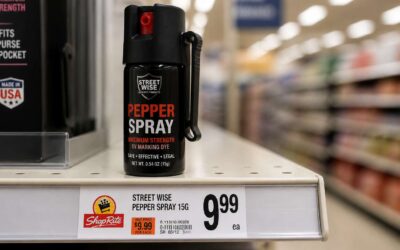
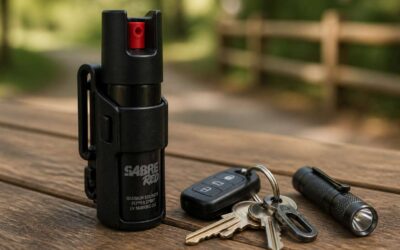
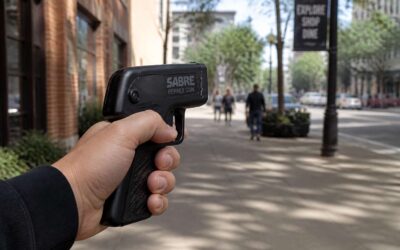
Pepper spray arrives in shapes that range from the practical to the theatrical. The traditional canister, small enough for a keyring, serves its purpose without ceremony. Then there is the gun like pepper spray, a device shaped like a firearm that delivers the same inflammatory payload. The difference matters beyond appearance.
Consider the practical distinctions:
- Traditional sprays rely on a press-and-aim motion, which works fine until a glove or a fumbled grip interferes.
- The gun-shaped option offers a trigger and a sightline, familiar to anyone who has handled a rifle on the farm.
- Novelty designs prioritise appearance over function, and some fail to deliver a steady stream.
Choosing between them is a matter of context. A canister slips into a pocket without comment. A gun like pepper spray sits in the hand with intention, and that intention alone can change the tone of an encounter.
How Pepper Spray Works: Active Ingredients and Effects
Within milliseconds of contact, oleoresin capsicum forces the eyes shut, and that is not an exaggeration. The active ingredient in a gun like pepper spray, as in any defence tool, works on a cellular level, triggering an immediate response that constricts the airways and induces copious tearing. That physiological truth holds no regard for posture or bravado.
The delivery mechanism matters as much as the compound. A trigger releases a pressurised stream, and the range of effect is measured in metres. The effects are swift:
– Swelling of the mucous membranes
– Involuntary coughing and gasping
– A disorienting, burning sensation
I find that the potency depends on the Scoville heat units, and South African regulations set clear limits. These symptoms peak within seconds and persist long enough for a sensible person to vacate the vicinity. The compound is not a toy, and the reaction is entirely predictable.
Key Differences Between Pepper Spray and Firearms
Few decisions weigh heavier than choosing how to defend a life. A firearm offers finality, while a gun like pepper spray offers a temporary reprieve, a chance for the aggressor to halt. The difference lies in the ethical responsibility each tool imposes.
Consider the practical distinctions:
- Firearms inflict ballistic trauma, often permanent.
- Pepper spray induces temporary incapacitation through mucous membrane irritation.
- A gun’s discharge leaves lasting legal and psychological consequences; a spray’s effects fade in minutes.
The psychological burden differs as well. This tool allows you to act without accepting a permanent outcome. In South Africa, where violent encounters are unpredictable, that distinction determines whether you leave the scene or live with the aftermath for the rest of your life.
Legal Considerations for Concealed Carry Alternatives
Laws Governing Pepper Spray Possession by State
Pretoria says yes, your suburb may say no. South Africa’s national laws do not require a permit for pepper spray, but this leniency conceals a complex array of municipal rules. A gun like pepper spray, shaped to match a firearm’s grip and trigger guard, invites scrutiny under the Firearms Control Act’s replica provisions. Police may view it as a disguised weapon, not a deterrent. That distinction matters during questioning, because intention is judged by appearance.
Local by-laws compound the uncertainty. Some municipalities restrict carry in schools, courts, and public gatherings. Others impose age limits or concentration caps. I have handled classified self-defense products for years, and the pattern is clear: the more realistic the device, the heavier the legal burden. Choosing a gun like pepper spray maximises tactical advantage but narrows your legal buffer. The right decision depends on your province and your tolerance for confrontation.
Age and Licensing Requirements for Self-Dense Sprays
Under South African law, the age of majority sets the baseline for self-defence spray possession, but retailers often enforce their own stricter thresholds. Some provinces treat a gun like pepper spray as a controlled accessory, requiring a competency certificate similar to firearm ownership. This is not a uniform rule, so your ID book and address may determine what you can purchase legally.
Licensing becomes a maze when the device mimics a firearm too closely. A gun like pepper spray may be classified under replica weapon statutes, which triggers the Firearms Control Act’s registration demands. Municipalities in Gauteng and the Western Cape have historically demanded documentation, while rural areas show more leniency.
Common requirements include:
– A valid South African ID or passport
– Proof of residence within the province of purchase
– A signed declaration stating no criminal record
– Compliance with local concentration caps, often 30% or lower
The legal buffer shrinks if you carry without proof of purchase. Officers can confiscate the device and charge you under by-law violations, regardless of national permissiveness.
Restrictions on Weapon-Like Appearances
The legal status of a gun like pepper spray shifts with its silhouette. South African police have broad discretion. A black polymer body with a trigger guard may read as a weapon before an officer registers its function. The Firearms Control Act covers replicas, and some spray models fall into that category.
Municipalities in Gauteng have issued fines for devices that imitate handguns. Carrying a gun like pepper spray in a waistband holster can escalate a routine stop into a weapons charge. The safest products use bright colours or clear grips that show their non-lethal purpose.
Officers typically assess:
- A silhouette that matches a pistol
- A trigger mechanism, even if decorative
- A metallic finish under partial concealment
These cues matter more than chemical capacity. An orange barrel tip or fluorescent body creates separation from firearm legislation. Without those markers, the law may classify the device as a weapon regardless of intended function.
Use of Force and Legal Self-Defense Boundaries
Each year, South Africans report over 1.1 million serious assaults. A pepper spray canister may be your first line of defense, but when you carry one that resembles a firearm, the legal grey area grows wider than the practical safety it provides. A device that mimics a pistol invites scrutiny that a bright orange self defence spray simply avoids.
Concealed carry alternatives require discretion. Under the Firearms Control Act, the perception of a weapon is enough to trigger a charge. A seasoned officer seeing a black polymer grip in your waistband will not pause to verify the chemical payload; they will react to the silhouette. This response is not paranoia, it is protocol.
The law draws a sharp line between defense and threat assessment. When you deploy a gun like pepper spray in a confrontation, the prosecution may argue you escalated the situation. A court will weigh your story against the visual signal you sent. The burden rests on your intent and the optics of your tool.
When evaluating your legal exposure, consider:
– The visibility of the device during a stop
– The colour and finish of the casing
– The presence of a trigger guard or slide
– Your history of carrying the item in public
Use of force standards in South Africa follow the principle of proportionality. You may repel an attack, but the force must match the threat. A device that looks like a service pistol could lead an aggressor to respond with lethal force, and a judge to question your judgement. The same active ingredient in a civilian canister places you on firmer ground. Defensive boundaries shift with perception, and the safest carry is the one that cannot be mistaken for something else.
Transportation and Carry Regulations
The moment your hand closes around a gun like pepper spray, the distinction between self-defense and provocation dissolves into the shadows of interpretation. Between the purchase and the confrontation lies a quieter battlefield, the daily logistics of transport where the law’s gaze is most unforgiving.
South Africa’s Firearms Control Act does not require a live round to define a weapon. The silhouette alone can implicate you. Your car’s glovebox, your backpack’s side pocket, or the clip on your belt becomes a stage for scrutiny. An officer who sees a matte black frame with a trigger guard will issue commands based on threat perception, not chemical reality. The burden of proof shifts to you, and the explanation of an inert irritant loses its weight against the shape of a pistol.
The regulations surrounding the carriage of defensive tools mirror the principles of forensic evidence. Storage, visibility, and context must align to avoid claims of intent to deceive. When transporting a gun like pepper spray, you must consider:
– Whether the item is secured in a dedicated compartment that separates it from daily carry items
– The orientation of the device, ensuring the trigger and muzzle profile are not immediately visible through fabric
– The legal classification of the unit, as some replicas fall under imitation firearm statutes despite their chemical payload
– The distinction between carrying for defense versus brandishing, where the latter carries its own criminal weight
The courts in this country have long held that the perception of a threat is as actionable as the threat itself. A device that mimics a firearm can transform a lawful stop into an arrest on suspicion of armed intent. The National Commissioner’s regulations on dangerous weapons emphasize the container over the contents, meaning the casing determines your exposure.
Vehicles are not sanctuaries. The front seat, the door pocket, or the central console are all areas where a gun like pepper spray becomes visible during a routine traffic stop. Each access point is a moment of judgment. The safest approach is to treat the device as you would a firearm, with the same procedural caution. Keep it out of immediate reach unless you are prepared to answer for its appearance. The law rewards discretion, not the appearance of force, and the quiet weight of a civilian canister far outweighs the risk of a mistaken silhouette.
Choosing the Right Defense Spray for Your Needs
Evaluating Spray Pattern: Stream vs. Fog vs. Foam
Choosing a defense spray is a tactical decision. Your spray pattern decides how you survive an encounter. Stream shoots a narrow jet, reaching farther than you think. Fog erupts into a wide cloud, ideal for stopping multiple threats. Foam clings to an attacker’s face, even in rain.
A gun like pepper spray must fit your daily reality. Narrow streets in Johannesburg call for stream’s precision. Indoor spaces reward foam’s adhesive grip. Open areas allow fog to create a barrier.
- Stream: long range, wind resistant
- Fog: area denial, short range
- Foam: sticky, weatherproof
Test each pattern before you rely on it. Know how it behaves in your hand.
Capacity and Range: What to Look For
Three metres is the average distance at which most street encounters begin in South Africa. That number should dictate the capacity and range you choose in a defense spray.
Capacity matters because adrenaline makes you miss. A small keychain unit gives you a few bursts, enough for one attacker. A larger canister buys you multiple attempts and a chance to retreat. Range defines your options. A short blast forces you to close distance, which is a poor trade. A stream reaching three metres or more lets you keep space while still landing the active ingredient.
- Stream sprays stretch up to five metres.
- Fog covers an area but only reaches a few metres.
- Foam sticks to the face but demands proximity.
For a gun like pepper spray, capacity and range work together. The unit should feel substantial in your palm, with a trigger you can press under stress. Test your canister once, note how many seconds it lasts, and measure that against your typical walking route.
Safety Features: Safeties, Clips, and Holsters
Under stress, the difference between a working tool and dead weight is how the unit sits in your hand. A gun like pepper spray demands deliberate design. The safety must resist accidental discharge in a handbag, yet release cleanly when your thumb shakes. Some units use a rotating collar, others a sliding switch. Both work, but only if you have practised the motion.
Clips and holsters matter more than most assume. A pocket clip that snags on fabric defeats the purpose. A holster that rides too high makes retrieval awkward. For a gun like pepper spray, the carry system should match your daily routine.
Features to examine:
- A visible indicator showing whether the unit is armed.
- A belt clip with a positive lock rather than a friction fit.
- A holster that covers the trigger while allowing a full grip.
A unit in the same pocket every day becomes part of your muscle memory.
Comparing Popular Brands and Models
Nearly every self defence instructor will tell you that the price tag on a canister does not dictate your survival. The market is saturated with options, but close to 70% of users purchase their first gun like pepper spray based on packaging alone. That is a dangerous gamble when your life hinges on the chemical reaction waiting inside the plastic housing.
Comparing brands requires you to look past the marketing bravado and examine the capsaicin concentration, not just the heat rating. A 2% major capsaicinoid content is the standard for serious deterrence, whereas many consumer models dilute this to appear less intimidating. You want a formula that operates on contact with mucous membranes, not one that simply smells spicy.
The stream pattern is the next battleground. A fogger is effective in a confined hallway, but it becomes your worst enemy in an open space with a breeze. A stream gun like pepper spray gives you reach and accuracy, allowing you to target the eyes from a safer distance. The trigger mechanism also varies wildly between models, from a simple twist top to a precision spring action.
– Check the expiry date. Old propellant loses pressure and range.
– Verify the nozzle integrity. A flimsy cap can crack in a handbag.
– Read the brand’s litigation history. Some companies settle more lawsuits than others.
Consider the psychological weight of the device. A unit that feels like a toy in your palm will not give you the confidence to deploy it under duress. The grip should fill your hand, and the texture should be coarse enough to hold when your palms sweat. There is a brutal clarity in admitting you might fumble, so choose a model with a raised bump texture that offers friction.
The choice ultimately comes down to your physical reality. A person with smaller hands needs a shorter throw and a shallower angle on the canister. A larger individual can handle a wider circumference, which often houses a greater spray volume. Your personal dexterity, not the brand’s reputation, is the deciding factor. That is the unspoken truth behind every product review you will ever read.
Factors to Consider for Everyday Carry
Carrying a gun like pepper spray in South Africa means deciding where it lives for your day. Higher waist belts generate enough friction to shift the print when you sit. I learned this after a taxi ride from Rosebank to Midrand left the canister pointing sideways. Your body shape, not the shelf display, dictates the position that works.
The height and weight of the unit need to align with the angle of your actual movement. Fitted clothing can press the trigger against your ribs in an awkward way.
- Choose a carry angle between the hip and the belt line, then test it while driving.
- Check the draw with a lightweight jacket worn over your shirt.
- Keep the nozzle clear of lint and dust that collect in everyday pockets.
That comfort test settles the entire purchase argument. A compact unit that presses into your stomach at lunchtime will be left in the glove box by evening.
Training and Effective Usage Techniques
Proper Grip and Aiming Methods
Proper training transforms a self-defense tool from a mere accessory into a reliable safeguard. When you hold a gun like pepper spray, the instincts are similar, but the mechanics demand a dedicated practice routine. You should start by drawing the canister from your pocket or holster repeatedly until the motion feels fluid and natural. The grip is essential; wrap all four fingers around the body of the unit while keeping your thumb firmly on the top actuator, ready to depress it the instant a threat appears.
Your stance plays a pivotal role in maintaining accuracy under duress. Stand with your feet shoulder-width apart, placing your strong side foot slightly back to create a solid base. When aiming, extend your arm fully and align the nozzle with your line of sight. Unlike a firearm, you do not need to use precise sights; instead, focus on directing the spray toward the attacker’s eyes and face. I often tell people to practice the “spray and move” technique, which involves releasing the formula while stepping off the line of attack.
To refine your aiming method, consider these practical steps:
– Practice with an inert water-based trainer to build muscle memory.
– Simulate a high-stress scenario by having a friend move toward you slowly.
– Aim for the forehead and allow the mist or stream to rain down into the eyes.
The reaction to a direct hit is immediate, but only if your technique is sound. A shaky hand or a weak wrist will send the stream wide, wasting your defensive advantage. Remember that a gun like pepper spray does not rely on kinetic impact; it relies on the physiological response of the eyes and respiratory system. Therefore, your focus should be on covering the target area generously rather than seeking a small, precise point of contact.
Finally, understand that wind and distance alter your delivery. A proper grip allows you to adapt quickly, tilting the canister slightly to correct for a breeze. The aiming method is not about pinpoint accuracy but about creating a dense cloud that the assailant must walk through to reach you. With repetition, the act of drawing, gripping, and aiming becomes a single, fluid response that bridges the gap between fear and effective action.
How to Deploy the Spray Quickly Under Stress
Under stress, the autonomic nervous system erases fine motor control within seconds. A gun like pepper spray is only a defensive tool if the draw to press action is reflexive. I teach students to practice the motion daily until it becomes a simple habit rather than a decision process!
For rapid deployment of a gun like pepper spray, simulate chaos. Use a timer app that fires randomly; when it sounds, draw, spray a short burst, and move off your original line. Repeat with both hands, because an attacker may pin your strong arm. In South Africa’s urban environment, those quick reactions separate a controlled response from a frozen one.
- Keep the canister in the same position every day.
- Practice drawing from a seated or kneeling position too.
- Spray once, then create distance.
Understanding Wind Direction and Environmental Factors
Wind direction changes everything when you carry a gun like pepper spray. A sudden gust can push the chemical cloud back into your face or blow it wide of the attacker’s eyes. In Cape Town’s coastal breeze, that mistake turns defence into liability.
Test your spray’s range on a calm day. Spray into the wind at a target distance and observe how the pattern drifts. Fog formulations suffer most. Streams hold their line better, which is why many South Africans prefer them for outdoor use.
- Check the forecast before heading out, especially in windy regions like the Karoo.
- Position yourself upwind of a threat when possible.
- Know that rain dilutes the active ingredients faster.
Indoor environments change the calculus too. Confined spaces prevent distance, so a short burst matters more than maximum range. A gun like pepper spray loses its advantage when you cannot read the airflow around you.
Post-Deployment: Creating Distance and Escaping
Once the spray cloud settles and the assailant is momentarily blinded, the actual task begins. Deploying a gun like pepper spray is one step, not the whole solution. The seconds that follow determine whether you walk away or get drawn into a scuffle.
Creating distance requires deliberate footwork. Back away while keeping the canister raised, because a stunned attacker can still lunge! In Cape Town’s crowded sidewalks, you must also mind the innocent bystander who stepped into the chaos. Your escape route deserves as much attention as your aim, believe me.
Training that ignores the retreat is incomplete. Drills that end the moment the spray fires teach a dangerous habit. The person who freezes to watch their work take effect becomes an easy target.
Practice Drills for Real-World Scenarios
Training with a gun like pepper spray demands more than firing at a stationary target on a Sunday afternoon. Real-world scenarios involve movement, noise, and a fair amount of panic. Recreate the chaos in a safe space. Have a friend shout, push, or wave a jacket while you draw, aim, and spray. Repeat until muscle memory takes over.
Practice from various positions too. Sitting in a car, standing at a taxi rank, or walking with shopping bags changes your draw stroke completely. A gun like pepper spray holster sits differently under a jacket than on a belt. Drill those draws specifically.
- Practice drawing with your non-dominant hand.
- Practice spraying while moving backward.
- Practice with a dummy canister to avoid pepper spray accidents.
Keep sessions short but frequent. Ten minutes weekly beats a three-hour marathon you abandon by February.
Maintenance, Storage, and Shelf Life
Checking Expiration Dates and Pressure Levels
Maintaining a gun like pepper spray involves checking expiration dates and pressure levels. South Africa’s warm climate can degrade the propellant faster than you expect. Store the canister in a cool, shaded area, away from car dashboards and direct sunlight. Heat damages pressurised systems.
Every few months, test the spray briefly into open air. A strong, consistent stream means the pressure is still healthy. A weak sputter suggests the charge is losing its force. Also inspect the nozzle for clogs caused by dried pepper residue.
Most manufacturers print a shelf life of three to four years. Note the purchase date on the base with a marker. If you drop the unit or expose it to water, replace it immediately. A stiff trigger or a loose safety mechanism indicates internal wear. Treat these signs seriously, as a failing gun like pepper spray offers false confidence.
Cleaning Nozzles and Preventing Clogs
The nozzle is the most neglected part of a gun like pepper spray. Every test spray leaves a sticky film of heat based resin, and that film hardens into a clog over weeks. I have seen canisters with perfect pressure fail completely because the owner never cleaned the front end.
Build a simple 10 second routine to stop this failure before it starts:
- Wipe the nozzle after every test spray
- Flush the tip with warm water once a month
- Store the unit upright so residue does not pool
Warm water melts the dried cap without draining the propellant. Never push a needle into the opening, because that widens the bore and ruins the stream pattern. A cotton bud with rubbing alcohol works well for stubborn buildup. In South Africa’s dusty climate, a clogged nozzle turns your self-defense spray into a decorative paperweight.
Safe Storage Temperatures and Locations
A gun like pepper spray is a pressurised precision tool, and temperature controls its lifespan. In a South African car, cabin heat can climb beyond 60°C. That heat expands the propellant and slowly forces it around the valve, turning a strong stream into a weak, wet spray.
- Store the unit between 10°C and 35°C.
- Keep it out of direct sunlight.
- Never leave it inside a vehicle, metal shed, or attic.
Shelf life depends on a steady environment. A dry bedroom drawer or pantry keeps the active resin potent for three to five years. High humidity in a bathroom or laundry room can decompose the formula and rust the crimp. Always choose a cold, dark cupboard away from heaters. That simple choice extends the usable life of your gun like spray. If the can sits and the surface feels hot, the location is wrong.
Replacement and Disposal Guidelines
A gun like pepper spray is only as reliable as its last inspection. Wipe the nozzle after each carry rotation and test the actuator monthly. A blocked jet is a silent failure. Storage remains a factor, but for a gun like pepper spray, replacement follows a stricter clock. The active resin degrades over time, so mark the base with the purchase date. After three years, retire the unit. Disposal requires care. The canister stays pressurised and flammable. Never puncture or burn it. Your local municipal waste depot accepts these units.
- Test spray outdoors every two months.
- Inspect the crimp for corrosion or swelling.
- Replace after three years regardless of use.
A spent unit becomes a liability. A weak mist, a clogged nozzle, or a leaking valve means the device has outlived its purpose. Dispose of it properly and buy fresh.
Comparing Defense Sprays to Other Non-Lethal Options
Pepper Spray vs. Stun Guns: Pros and Cons
Fewer than 4% of people will ever use a stun gun in a defensive scenario, yet many carry one expecting it to be a magic wand. The reality is far less thrilling. Stun guns require direct, sustained contact with an assailant, which is an awkward proposition when that assailant is actively trying to hit you. Your adrenaline will also make you less sensitive to the electric shock you deliver, which is a cruel trick of biology. You might both stand there yelling, convinced the other is about to fall over.
– You get one, singular chance to make contact.
– The crackling spark is a great deterrent, until you miss.
– Maintenance and battery life are constant worries.
Pepper spray, especially a gun like pepper spray model, allows you to stand much further away, which is a position any sensible person prefers. It creates a physical barrier of inflammatory agents that does not rely on your arm strength or aim. A stun gun offers pain compliance, but a solid dose of oleoresin capsicum causes involuntary eye closure and a sudden, pressing need to sit down. The spray wins on range and area denial, while the stun gun wins on not being affected by wind. Dry weather conditions favor the electric route, but for overall tactical advantage, a high-velocity pepper projectile plus staying out of arm’s reach is the more practical choice in South Africa’s current climate. Just remember that either tool becomes a liability if you freeze, so your training matters more than the gadget in your holster.
Pepper Spray vs. Tactical Flashlights
Consider the tactical flashlight. It is a superb tool for illumination and momentary disorientation, but it demands precise aim at the eyes and a willingness to close distance. A gun like pepper spray device, by contrast, does not require you to find a vulnerable target. It creates a cloud or stream that the attacker must move through.
In a South African parking lot, darkness is a common factor. A flashlight reveals the threat, but it does not stop the threat. The spray ends the encounter by forcing involuntary eye closure and respiratory distress. That is the difference between seeing danger and surviving it.
- Flashlights excel at awareness.
- Sprays excel at incapacitation.
- Carrying both is sensible, but know which one saves your skin.
Combining Multiple Tools for a Complete Defense Strategy
The notion that one tool can solve every threat is a fallacy. Stun guns demand contact, a risk that many find unacceptable. A gun like pepper spray offers standoff capability, but even that has limits. This reality pushes many South Africans to layer their defenses. A compact spray provides immediate reaction; a larger, more robust unit provides capacity for home defense. Pairing a bright light with a gun like pepper spray works well in low-light scenarios, using the light to assess and the spray to terminate the threat. Some also add a fixed-blade knife, acknowledging that tools fail and backups matter. Each layer requires practice, and each layer buys time.
The Role of Personal Alarms and Whistles
A personal alarm shrieks in a concrete stairwell. A whistle sounds across an open field. Neither halts a charge. I have carried both, and I know their limits. They alert, but they do not disable. In South Africa, response times stretch beyond comfort. A gun like pepper spray ends the threat on the spot. It needs no audience. Alarms and whistles suit specific contexts: a crowded bus, a dark driveway, a neighbor within earshot.
Consider the order of utility:
- Alarms for attracting witnesses in populated areas.
- Whistles for long-range signaling in open terrain.
- Pepper spray for direct, immediate defense.
Each tool has a role, yet only one provides a self-contained answer. For daily carry, a gun like pepper spray outperforms sound-based devices.
Expert Recommendations for Different Lifestyles
Every non-lethal option demands a tradeoff. A kubotan requires contact and leverage. An expandable baton needs training and carries legal weight in South Africa. A gun like pepper spray converts distance into deterrence without the commitment of a firearm. Experts weigh lifestyle heavily when recommending tools.
- Apartment dwellers should prioritize low blowback risk.
- Outdoor workers need wind-resistant stream patterns.
- Drivers need a seatbelt-accessible mount.
For urban professionals, compactness matters most, so a small canister on a keychain wins. For rural property owners, a larger fogger with extended range suits open spaces. For shift workers navigating empty parking lots, quick access from a holster takes priority. I have watched experts divide these choices by environment, not ego. Each lifestyle changes the calculus. A gun like pepper spray fits most daily routines without redesigning your wardrobe.
0 Comments