
Early Development and Adoption
The Precursors to OC Spray
Imagine trying to enforce the peace while wrestling a Gremlin, and no, we don’t mean the car. Before the 1990s craze, the pepper spray 1980s scene was quietly simmering in the background, waiting to boil over. While the decade gave us big hair and even bigger shoulder pads, the self-defense industry was shifting its focus from purely chemical irritants like CN and CS gas to something with a bit more culinary heat.
Actually, the early development of what we now call OC spray was less about kitchen accidents and more about targeted research. The precursor formulas were often derived from natural sources, specifically oleoresin capsicum extracted from hot peppers. These early iterations were significantly weaker and sometimes less reliable than today’s potent formulations. It wasn’t until the mid-1980s that the FBI began testing these pepper-based sprays as a safer alternative to the more toxic tear gases that were known to have adverse effects on individuals with respiratory issues.
The real adoption, however, faced a rocky road. Law enforcement agencies were skeptical of the switch, and the public had limited exposure. The pepper spray 1980s market was niche, primarily consisting of mail-order catalogs and specialty outdoor stores. It wasn’t for everyone, and here is why it stood out during that time:
- It worked on a broader range of subjects, including those under the influence of drugs or experiencing a mental health crisis.
- The inflammatory response was immediate, causing eye closure and difficulty breathing, which allowed officers to gain control quickly.
- It was considered less lethal than firearms and had a lower toxicity profile compared to the chemical agents of the previous decades.
Despite its obvious potential, the standards for strength and purity were practically nonexistent until the late 1980s. It was a bit of a wild west, with various pepper spray 1980s formulas hitting the market, some being little more than diluted tabasco sauce, while others were potent enough to cause severe skin irritation for days. This inconsistency almost killed the product before it truly began. Yet, those early, rough-around-the-edges formulas laid the crucial groundwork for the sophisticated and standardized defensive tools we rely on today, proving that even a decade known for excess could refine something genuinely useful.
Key Inventions and Patents
After the untidy precursor years, patent filings shaped the pepper spray 1980s market. One pivotal 1987 design introduced a pressurized canister with a directional nozzle, replacing clumsy squeeze bottles. Agencies finally had something to test.
Early adoption hinged on three inventions:
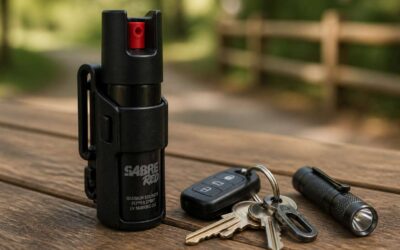
- A twist-lock actuator for accidental discharge prevention
- An ultraviolet dye for suspect identification
- A holster clip for duty belts
These patents standardized formulas, though purity remained unpredictable. It took FBI trials in the late decade to push past skepticism. The result was consistent heat.
Introduction into Policing
By 1985, pepper spray 1980s had shifted from patent drawings to patrol car trunks. Small police departments in California and Florida ran the first real-world tests. Officers noticed something odd: the spray stopped aggressive suspects quickly, but the results were wildly inconsistent. One canister delivered a dense fog, the next a weak sputter. This unpredictability kept most agencies skeptical.
The breakthrough came when the FBI agreed to run controlled trials in 1988. They measured heat, range, and repeatability. Here is what the trials revealed:
- Heat levels varied by up to 300% between batches
- Effective range rarely exceeded eight feet
- Wind drift made training essential
These findings forced manufacturers to standardize. By 1989, pepper spray 1980s had earned a place on duty belts across the country. The adoption was slow, but the logic was undeniable.
How 1980s Pepper Spray Worked
Oleoresin Capsicum Extraction Process
The pepper spray 1980s era hinged on a meticulous oleoresin capsicum extraction process. Dried chili pods were ground into a fine powder and soaked in a solvent such as ethanol, which pulled the pungent oily resin from the plant cells. After filtration, the solvent evaporated, leaving a potent concentrate that could be mixed with a carrier liquid and pressurized gas.
- Capsaicin binds to the TRPV1 receptor, triggering an immediate pain response.
- The eyes slam shut and tear violently, reducing vision to nothing.
- Inhalation causes bronchial constriction, a temporary but terrifying breathlessness.
What set this 1980s formulation apart was its physical effect, which disabled voluntary muscle coordination for up to forty-five minutes. The spray did not rely on force or impact. It entered the nervous system and forced a biological shutdown of normal function. That raw, involuntary reaction is why these early sprays remain the benchmark for modern self-defense tools.
Capsaicin and Potency Measurements
The 1980s marked a definitive shift in civilian self-defense, moving away from the quaint reliance on physical force toward a more chemical solution. While the concept of using irritants was ancient, the modern iteration of pepper spray 1980s technology was a triumph of biochemistry over brute strength. The secret lay in the specific capsaicinoids extracted from chili peppers, a formula that provided a reliable, non-lethal advantage against aggressive adversaries.
At its core, the efficacy of this era’s formulation depended on the purity of the capsaicin extract. Manufacturers realized that a high concentration of the most potent capsaicinoids was necessary to guarantee an immediate stop. The potency measurements of that decade often felt inconsistent, however. Before the establishment of strict legal standards, the market saw a wide variance in quality, ranging from weak, watery solutions to industrial-strength formulas that could drop a charging bull. This inconsistency in potency measurements eventually led to the standardization requirements we see in law enforcement specifications today, but for the civilian of the 1980s, it was a gamble.
Once the active ingredients were dialed in, the biological response was anything but subtle. The spray worked by triggering a violent inflammatory reaction in the mucous membranes, a sensation that was overwhelming and completely disorienting. The specific physiological mechanics created a cascade of effects:
– Instantaneous closure of the eyes due to involuntary spasms, creating temporary blindness.
– A burning, searing pain on the skin that felt as though it was being heated from within.
– Gasping and coughing fits triggered by rapid bronchial constriction, often leading to a temporary loss of breath.
This cascade was the true secret to its success. When an attacker inhaled the mist, the resulting bronchial constriction caused a frightening feeling of suffocation, completely overriding their intent to fight. This reaction was not just a distraction; it was a physical hijacking of the nervous system. The focus on the burning pain and the inability to draw breath forced a complete cessation of hostile motor functions, giving the victim a vital window of opportunity to escape. The simple aerosol canister, filled with that viscous, oily extract, leveled the playing field in a way that a punch or a kick never could. It made the physical strength of the attacker irrelevant, replacing it with the immutable laws of chemistry and human physiology.
Physiological Effects on Attacker
The reaction begins in milliseconds, a fact that made pepper spray 1980s self-defense solutions so effective. Upon contact, the eyes slam shut with force that feels involuntary and absolute. This sudden blindness is accompanied by a burning sensation that spreads across the face like a chemical fire.
The respiratory system mounts a fierce defense of its own. Within seconds, the throat swells and the airway constricts, triggering violent coughing and gasping for air. The body attempts to purge the irritant, but the oily capsaicinoids cling stubbornly to mucous membranes, prolonging the distress.
This physiological cascade follows a predictable sequence that incapacitates at every level.
1. Eyes slam shut due to involuntary muscle spasms, eliminating vision.
2. Skin under the spray inflames, producing intense, searing pain.
3. Bronchial passages constrict, causing shortness of breath and panic.
4. The combination of pain and suffocation overwhelms cognitive function.
The attacker loses motor control simply because the body shifts into emergency survival mode. This system override is why the original pepper spray 1980s formula became legendary. It did not rely on pain compliance alone. The panic induced by an inability to breathe forces the aggressor to stop everything and focus solely on recovery. This biological imperative leaves no room for further hostile action, granting the victim crucial time to flee.
Safety Profile and Complications
The reality of using pepper spray in the 1980s was messy. The early aerosol formulations lacked the refined propellants of today, often producing a weak stream that could mist back into the user’s face. That said, the core mechanics were straightforward. The active ingredient, oleoresin capsicum, targeted the eyes and skin instantly, causing an involuntary shutdown of the affected senses.
While generally considered non-lethal, the safety profile of this era had significant caveats. Law enforcement agencies discovered that the effects were not always uniform.
- Subjects under the influence of drugs or alcohol often displayed a high tolerance to the inflammatory agents.
- Individuals with asthma faced a heightened risk of bronchospasm, which could escalate into a serious medical emergency.
- Contamination of the spray nozzle was a common issue, leading to malfunctions during critical street confrontations.
These complications ultimately shaped the evolution of the tool we recognize today. The volatile nature of the pepper spray 1980s canisters meant that exposure to extreme heat could cause the canister to burst, creating a hazard for the officer carrying it. Manufacturers had to adapt quickly, moving toward more reliable stream patterns and safer pressurization systems. The legacy of that decade is a stark reminder that even a “less lethal” weapon carries a weight of unpredictable variables. It was a necessary trial-and-error period that refined the safety and effectiveness now expected by civilians and professionals alike.
Commercial Market Expansion
Major Brands and Packaging
By the early 1980s, what began as a niche tool for postal carriers had transformed into a commercial commodity. The demand for a non-lethal deterrent grew alongside public anxiety, creating a vacuum that several ambitious companies rushed to fill. This was the pivotal moment when pepper spray 1980s found its footing as a retail product, moving beyond police supply catalogs and into the realm of everyday personal security.
The commercial market was initially fragmented, dominated by chemical giants who leveraged their existing aerosol production lines. Among the most significant players were those who recognized the specific advantages of oleoresin capsicum over earlier formulas. Their investment in marketing shifted the narrative from a simple repellent to a sophisticated self-defense instrument. One defining feature of the pepper spray 1980s market was the aggressive branding for law enforcement, which inadvertently built a reputation for reliability that civilian buyers craved.
Packaging design during this era was dictated by necessity and the limitations of contemporary manufacturing. The typical product was an aerosol canister, often resembling a large deodorant can, painted in utilitarian colors like black, navy, or industrial yellow. These were not the sleek, pocket-sized models of today. Instead, they were bulky, functional, and often required a two-handed operation to deploy accurately under stress.
– The key components of a standard unit included the aluminum canister, a valve mechanism, and the liquid stream.
– A safety cap was common, though it was frequently criticized for impeding quick access.
– Labeling was rudimentary, focusing on the pepper spray 1980s range and the “OC” percentage, rather than user-friendly instructions.
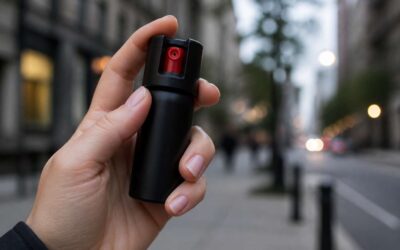
The industry matured when manufacturers realized that the container itself was as important as the formula inside. It was the era when the “keychain” model emerged, allowing for instant accessibility. This packaging innovation was a direct response to the feedback from early users who valued discretion over raw capacity. The shift toward smaller, more ergonomic holsters and firing mechanisms was the first step toward the sophisticated civilian market we recognize todaycars. It was a formative period, one where form finally began to catch up with the potent function of the spray itself.
Civilian Sales and Marketing Strategies
The shift from police-only procurement to civilian shelves did not happen overnight. It required a change in how manufacturers perceived their end user. During the early part of the decade, the primary customer was the state. By the mid-1980s, that model had inverted. Sales teams began pitching directly to private citizens, specifically women living alone and late-shift workers. This recalibration of the pepper spray 1980s market was not a grassroots movement; it was a calculated response to stagnating law enforcement budgets.
To capture this new demographic, companies had to dismantle the existing sales structure. They moved away from specialized supply catalogs and into mass retail outlets. This distribution shift forced a rebranding that emphasized personal autonomy rather than riot control. Marketing materials dropped the clinical language of irritants and adopted terms like “personal defense spray” and “safety companion.” The pitch was simple: self-reliance in a pocket-sized format. This direct-to-consumer strategy proved lucrative.
Several factors contributed to this rapid commercial adoption.
– The compact size allowed for easy storage in purses or glove compartments, reducing the barrier to daily carry.
– Aggressive price competition brought the cost down from a premium accessory to an affordable household staple.
– Media coverage of high-profile crimes created a sense of urgency that advertising alone could not replicate.
By the end of the decade, the pepper spray 1980s narrative had fully transitioned from a tool of the state to a symbol of individual preparedness. The marketing simply told people what they already suspected: the world was changing, and protection was now a personal responsibility.
Pricing Trends Through the Decade
In 1982, a single canister of OC spray carried a sticker price that made police purchasing officers wince. That was sustainable while the state was the only customer. Once ordinary civilians entered the market, the economy of the pepper spray 1980s changed shape completely.
Mass production drove unit costs down, and a crowded field of new competitors forced distributors to trim margins. Some shops even sold the spray at cost, hoping to pull people through the door for other purchases.
- Pepper farmers boosted yields, lowering the price of raw oleoresin capsicum.
- Filling lines automated, cutting labour costs.
- Multiple brands split the market, eliminating monopoly pricing.
By 1989, what once seemed like specialist equipment had become an affordable impulse buy on any pharmacy shelf.
Market Leaders and Competition
By the mid 1980s, the pepper spray 1980s market had moved far beyond police procurement offices. Independent distributors in Johannesburg and Cape Town began importing canisters directly from American manufacturers, bypassing traditional security supply chains. The leaders were firms like Mace Security International and Def-Tec, both fighting for shelf space in a market that doubled year over year.
Competition came from unexpected quarters. Local chemical companies started producing their own OC blends, and some even undercut the Americans by half.
- Mace held the brand recognition advantage
- Def-Tec dominated law enforcement contracts
- Local manufacturers won on price
Retailers played these rivals against each other, forcing constant innovation in nozzle design and canister reliability.
International Availability
Legal and Regulatory Milestones
State-Level Legalization Waves
The 1980s legal landscape for self-defense tools was a patchwork of contradictions. While police forces adopted OC spray early in the decade, civilians often faced outright bans or murky regulations. That changed as state legislatures recognized what law enforcement already knew: pepper spray 1980s offered a non-lethal, effective deterrent. California led the charge in 1980, becoming the first state to explicitly legalize civilian possession. Massachusetts and New York followed suit, though with restrictions on canister size and capsaicin concentration.
Key legal milestones during this era included:
– California’s 1980 statute establishing labeling requirements and age limits
– Florida’s 1985 approval of sprays with up to 10% OC content
– New York’s 1987 ruling that pepper spray fell outside the state’s prohibition on “tear gas” devices
These state-level waves didn’t create uniform federal law, but they built a foundation. By 1989, over thirty states had legalized civilian pepper spray, each with its own strange caveats. The result was a fractured market where a product legal in Texas could land you in jail across the border in Oklahoma. That inconsistency, though, didn’t slow consumer demand. It merely shaped how manufacturers packaged and marketed their wares in the late eighties.
Federal Regulatory Stance
While a Californian could legally carry OC spray in 1980, the canister in her purse still had to satisfy a federal agency. The EPA classified oleoresin capsicum as a biochemical pesticide under FIFRA. Every manufacturer selling pepper spray 1980s products needed an EPA registration number printed on the label. That number promised the product would not harm the user or the environment during intended use. It was a strange lens for a self-defense tool, but it gave the federal government quiet authority.
- Toxicity testing for active ingredients
- Mandatory label warnings on every canister
- Renewal fees payable by each manufacturer
The federal stance ended there, mostly. The US Postal Service barred OC sprays from the mail, and the Hazardous Materials Transportation Act limited their movement by air. Congress weighed in only obliquely, never passing a national rule for civilian carry. For the pepper spray 1980s industry, this regulatory vacuum meant the federal hand was visible but not heavy. The EPA held the ledger, and nobody in Washington claimed the rest.
Standards for Formulation and Labeling
While the EPA kept the ledger, state regulators actually read the labels. California led the charge in 1982, demanding net contents, active ingredient percentages, and first aid instructions in a readable type size. Other states copied fragments of that language, so a pepper spray 1980s canister bought in Tampa could legally claim less than one purchased in Sacramento.
- Active capsaicin percentage displayed prominently
- Expiration date or batch code for stability testing
- First aid warnings for eye and skin contact
Formulation standards were a choose your own adventure before the middle of the decade. Some brands used 500,000 Scoville unit extracts, while others shipped watery blends that separated after three months on a shelf. The industry eventually settled on a 10 percent OC minimum as a de facto baseline, not because any law demanded it, but because customers learned to check the fine print. By 1987, a canister without those markings was nearly unsellable.
Lawsuits and Use-of-Force Review
In 1984, one excessive force verdict cost a California city more than its entire annual pepper spray 1980s procurement budget. The plaintiff had been doused twice, once while handcuffed. That single ruling rattled every municipal risk manager in the country!
Use-of-force review boards had no shared doctrine. Some departments classified OC spray as a weapon. Others treated it like a loud voice. The inconsistency made lawsuits inevitable. Officers in Pretoria or Durban watched these American cases, because South African procurement followed the same arguments years later. In my view, that courtroom mess became our procurement roadmap.
Key legal milestones included:
- Appellate decisions requiring documentation of every spray deployment
- Liability insurers mandating yearly re-certification for officers
These lawsuits did not kill the pepper spray 1980s market. They dragged it into policy compliance, one deposition at a time.
Cultural and Practical Legacy
Pepper Spray in News and Media
Connection to the Self-Defense Era
By the end of the 1980s, pepper spray had changed who gets to feel safe. Its cultural legacy in South Africa is less about the canister and more about who could carry it. Self-defense no longer belonged to the strong or the trained. The pepper spray 1980s era introduced a practical approach for ordinary people.
I see that approach still shaping today’s self-defense era. Consider what it normalized:
- Carrying a deterrent without a license
- Taking personal safety into one’s own hands
- Having a non-lethal option in daily life
It connected past and present by showing that protection could be discreet and accessible. That legacy remains remarkably relevant in South Africa!
Criticism and Calls for Better Testing
The legacy of pepper spray 1980s is not uncontested. While the decade championed accessible self-defense, it also exposed a troubling lack of oversight. Manufacturers sold a potent chemical agent with little regard for long-term effects or user accountability.
This rapid proliferation had practical consequences.
– Misfires and wind blowback incidents sent several users to emergency rooms.
– Reports surfaced of offenders using seized canisters against their original owners.
– Law enforcement noted a rise in assaults involving a weapon they could not reliably trace.
These events fueled criticism of the product’s design. The trigger mechanisms were simple, but they were not always reliable. The cultural appeal of personal safety clashed with the reality of a device that could fail or be turned against you.
The calls for better testing grew louder as a result. South African consumers began asking for standardized performance metrics. They wanted to know the exact capsaicin content, the spray pattern distance, and the shelf life of the canister. The pepper spray 1980s boom pushed the market to demand verifiable data, not just marketing claims. The urgency of that demand still echoes in today’s regulatory debates.
Influence on Modern Less-Lethal Weapons
The pepper spray 1980s did more than put canisters in pockets. It established design principles for less-lethal weapons that still guide engineering teams today. The decade’s failures, particularly misfires and blowback, forced engineers to rethink nozzle geometry and propellant pressure. Modern launchers build on those refinements, correcting what the 1980s left unfinished.
Practical lessons also shaped operational doctrine. Agencies now treat OC spray as one layer in a continuum of force, a concept born from pepper spray 1980s street encounters. The era’s confusion around spray patterns led to clearer certification standards. We can trace today’s emphasis on officer accountability directly to those early, messy deployments. Those lessons endure!
Modern less-lethal systems carry forward several specific inheritances:
- Compact canister ergonomics designed for rapid draw and one-handed operation
- Inert training rounds that mirror the feel of live spray without the hazard
- Decontamination procedures developed in response to accidental exposure
0 Comments