
Legal Foundations of Self Defence
Understanding the Concept of Self Defence in Law
Between 2022 and 2023, South Africa recorded over 1.3 million contact crimes, a stark reminder that the legal right to protect oneself is not abstract. The law recognizes a profound difference between aggression and lawful protection, granting citizens the authority to use force when faced with an unlawful attack. However, this authority is anchored in strict legal principles rather than emotional impulse, and the onus falls on the defender to prove their actions were justified.
The legal foundation of self defence and private defence rests on the requirement of an unlawful, imminent, and continuing attack against a legally protected interest. This protection extends to your person, your property, or another individual who requires assistance. The defensive action must be directed solely at repelling the threat, and the force employed must be proportionate to the danger posed. If an individual had a clear avenue to avoid the conflict, such as retreating to safety, the courts will scrutinize whether the use of force was truly necessary and thus, lawful.
Origins and Rationale Behind Defensive Force
The origins of self defence and private defence are woven into the fabric of Roman-Dutch law, the quiet foundation of South Africa’s legal system. Early jurists, writing centuries before the modern state, recognised a simple truth: when danger arrives without warning, the law cannot stand between a person and the blade. The right to repel force with force therefore passed from the state to the individual, not as a gift, but as an inheritance of natural law.
Why does this matter today? Because the rationale behind defensive force is not chaos, but order. The courts protect this right precisely because it upholds human dignity and discourages lawlessness. A person who resists an armed intruder is not breaching the peace; they are restoring it. This philosophical grounding transforms self defence and private defence from a mere excuse into a principled legal doctrine, one that respects both the individual and the collective.
Criminal vs. Civil Liability for Defensive Actions
Section 49 of the Criminal Procedure Act grants a person specific powers to use force when arresting a suspect, yet this statutory grant is separate from the common law right to repel an attack. When someone acts to protect themselves, the law first asks whether the response was necessary and proportionate. If both conditions are met, the actor escapes criminal conviction under the principle of self defence and private defence.
The criminal and civil domains operate on different burdens of proof. In a criminal trial, the state must prove beyond reasonable doubt that the accused did not act in defence. In a civil claim for damages, the plaintiff only needs to show on a balance of probabilities that the defensive force was excessive. This asymmetry means a person might walk free from a criminal court, yet still face a financial judgment in a civil one.
– Criminal liability requires an unlawful act, and successful self defence and private defence negates unlawfulness.
– Civil liability asks whether the defendant’s conduct fell below the standard of a reasonable person in those circumstances.
– A court may find force excessive for civil purposes even when it was sufficient for a criminal acquittal.
The practical consequence is that every defensive act carries two legal audits. An acquittal in the criminal arena does not immunise the defender from civil scrutiny. South African courts have noted that the same facts can produce opposite outcomes, depending on the forum. The defensive actor must therefore document the threat, the response, and the available alternatives, because memory fades while court dates arrive years later. The law expects a person to be a thinking defender, not a reflexive one.
The Role of Imminence and Necessity
One second decides everything. In law, that second must be measured against the twin tests of imminence and necessity. The legal foundations of self defence and private defence demand a threat that is real, immediate, and unavoidable by other means.
Imminence looks at the moment of action. Was the attacker already moving? Was the weapon already raised? Necessity looks at alternatives. Could the defender have retreated, called for help, or used non-lethal force? South African courts weigh these facts with care, because a defensive act is lawful only when both tests are satisfied.
- Imminence prevents punishment for pre-emptive strikes against distant dangers.
- Necessity requires that the force used be the least harmful option.
Without these constraints, the defence would become a licence for retaliation.
Jurisdictional Variations in Defensive Rights
Two centuries of South African case law have produced a doctrine quite different from what an American defendant would face. The duty to retreat offers the clearest example. In South Africa, retreat is required only when it is safe to do so. Many American states, however, have abolished that duty through Stand Your Ground statutes. German criminal law goes further again, demanding strict proportionality in every defensive encounter. Each system answers the same question differently: how much force may a threatened person use?
- South Africa: retreat only when physically safe.
- United States: several states remove the duty entirely.
- Germany: force must be the least intrusive option available.
These variations confirm that self defence and private defence are not static doctrines. They evolve alongside cultural values and historical circumstance, which is why the legal foundations of self defence and private defence cannot be transplanted across borders.
Private Defence in Practice
Distinguishing Private Defence from Public Defence
South Africa’s crime statistics report a high number of completed attacks, not merely attempts, which makes the practical application of defensive rights a pressing daily concern. When the threat has passed, or when the danger is to the broader community, the right to use force changes. Private defence is a personal shield, activated only when an unlawful attack is directed at you, your property, or a person legally in your care. This is a reactive right, grounded in the immediacy of the moment, and it ends the second the danger is neutralised.
– The scope is narrow, limited to repelling a specific, ongoing threat.
– The authority is personal, exercised by the individual under attack or a helper.
– The justification dies with the threat, meaning force after the fact is vengeance.
Public defence, conversely, is a proactive mechanism employed by the state. It involves designated officers, firearms, and tactical units, and it exists to enforce the law. The civilian has both a right and a duty to retreat, when possible, while the police have the authority to pursue. The law draws a bright line here: you may protect your body, but you cannot become a vigilante to protect a stranger’s property across the street. South African courts are strict, assessing each action against the exact threat level. The magic of the law lies in this boundary, it whispers that your power is the shield, but the moment you swing it offensively, it becomes a sword the state will judge.
Who Can Claim Private Defence?
Not everyone gets to play the hero. South African law limits the claim of self defence and private defence to specific actors. You can invoke it when an unlawful attack targets your person, your property, or someone in your lawful care. This covers immediate family, but it also extends to employees under your supervision or a neighbour you are physically protecting from a direct assault.
The right is not exclusive to the primary victim. A bystander who intervenes to stop an attack can claim the same protection, provided their actions match the threat level. The law assesses your conduct objectively. A third party who uses force to repel an attacker stands on the same legal ground as the person being attacked.
The core elements a court will examine are:
– The attack must be unlawful and already underway or imminent.
– The defensive force must be directed solely at the attacker.
– Your response must be proportional to the danger you faced.
The courts hold this principle firmly. You cannot claim self defence and private defence for protecting property that is not yours unless a person is in immediate danger. You also lose the right if you provoke the attack or if you use the situation to settle old scores. The law demands honesty in your actions; it reviews your mindset and the objective facts of the encounter.
Protecting Others: The Scope of Private Defence
The instinct to shield another person from harm often feels more urgent than defending yourself. South African law recognises this, but the boundaries require careful attention. When you step into a conflict to protect a family member, an employee, or even a stranger, the legal protection of self defence and private defence applies, but only if you satisfy the same core requirements as a primary victim. Your intervention must occur while the unlawful attack is in progress or immediately imminent. Your force must be directed at the attacker and no one else.
The courts also evaluate whether your level of force was proportional to what a reasonable person would have used in those circumstances. Acting beyond that measure can transform a lawful intervention into a criminal assault. In a practical sense, your legitimacy rests on these elements:
– The person you protect faces an unlawful action.
– The threat is real and immediate, not speculative.
– Your response escalates no further than necessary to neutralise the danger.
The law does not penalise decisiveness, but it does punish recklessness. The scope of protecting others also narrows when property is involved. You may use force to defend someone else’s belongings only when a person’s safety is tied to that property that moment. Protecting the assets of an absent neighbour seldom meets the threshold for defensive force. The philosophical ground here is simple; private defence is a shield, not a sword. Your mindset must align with halting an attack, not teaching a lesson. The objective facts will reveal that intention, and the law will judge accordingly.
Defence of Property as a Component of Private Defence
Understanding private defence in practice requires a clear assessment of the situation. A person may use reasonable force to protect themselves or another from an unlawful attack. When this extends to property, the law is more cautious. You can protect your belongings, but you generally cannot use deadly force for mere property. The defence of property is a component of private defence, though courts often require that the threat to property also involves a threat to a person. You must retreat if possible. The force used must always be proportional to the danger, and it must cease once the threat ends.
When Private Defence Becomes Excessive or Unlawful
The line between lawful protection and unlawful violence is thin, often crossed in the heat of a desperate moment. In South African law, the moment your response outpaces the threat, your claim to self defence and private defence crumbles. The law does not reward vengeance; it tolerates necessity.
When the attacker flees, or the weapon is dropped, the justification vanishes instantly. Continuing to strike transforms you from defender into aggressor. Consider the markers of excess:
– The threat had already ceased.
– The force used was grossly disproportionate.
– You pursued the retreating party.
Each of these steps leads into the shadow of criminal liability. The courts scrutinize the exact second the balance tips. A preemptive attack, or a retaliation after the danger has passed, is not self defence and private defence, but assault or murder. The law demands that your actions remain tethered to the immediate peril, not to anger or fear that lingers afterwards.
Core Principles for a Valid Defensive Claim
Proportionality – Matching Force to Threat
One extra punch after the attacker falls can turn a tavern brawl into a murder charge. Proportionality keeps self defence and private defence stable by ensuring force matches threat. In South Africa, this is clinical, not moral.
A shove earns a shove, not a gun. The court reviews the weapon type, your size, and the exit. A reasonable person would not replace a fist with a knife.
- Use the attacker’s capacity to harm.
- Use force equal to the attack.
- Stop when the threat disappears.
An armed intruder with a shotgun can justify lethal force. A thief fleeing away cannot. The moment they lose the threat, further force becomes unlawful. That is the line reasonableness draws. For a solid claim, let your force vanish with the danger. That is the essence of self defence and private defence.
The Test of Reasonableness in Defensive Action
Reasonable force is not a guess. It is a legal standard applied with objectivity. For a valid defensive claim, your response must match what a sober person would have done in your situation! This is the foundational test of self defence and private defence. Reasonableness governs how courts assess the threat, the necessity, and the proportionality. Courts do not use hindsight. They review exact factors you saw, heard, knew. You must show an honest belief in danger, and that belief must be defensible.
The core principles are simple:
- Belief in the threatened harm must be genuine
- That belief must be reasonable to a third party
- Force used must correspond to the danger
These three requirements prevent the defence from being misused. When one fails, the entire claim falls.
Duty to Retreat and Stand Your Ground Concepts
South African law does not demand that you flee. However, the duty to retreat still influences how courts weigh your actions. A failure to step back, where safe, can weaken a claim of self defence and private defence. Stand your ground concepts remove that expectation. They allow you to hold your position and meet force with force. Which approach governs depends on your jurisdiction and circumstances.
For a valid defensive claim, three anchors hold steady. You must genuinely believe harm is imminent. That belief must survive objective scrutiny. The force used must stay proportional to the threat.
- Retreat is not mandatory, but it is evidence of reasonableness.
- Stand your ground laws eliminate the retreat requirement.
- Courts assess the total context, not a single factor.
Each element interacts with the others. A lone nightly intruder in your home changes the calculus for self defence and private defence, unlike a street confrontation.
Assessing the State of Mind: Honest Belief and Reasonable Grounds
The assessment of a valid defensive claim begins with the actor’s state of mind, measured against an objective standard. You must hold an honest belief that harm is imminent. That belief must be one a reasonable person would share in the same circumstances. This dual inquiry forms the bedrock of self defence and private defence. Courts evaluate this by scrutinizing several factors:
- The specific actions leading up to the threat.
- The knowledge the defender possessed at that moment.
- The absence of time for deliberation.
A mere suspicion never suffices. It requires a genuine, reasoned apprehension. The law rejects fanciful fears. It embraces grounded ones. The retrospective analysis of a defender’s perception is delicate. Fear colours memory. For such a claim, the line between honest belief and reckless assumption often dictates the verdict.
Evidence and the Burden of Proof in Self-Defence Cases
Evidence in defensive claims is scrutinised with hindsight. The burden rests on the defender to show, on a balance of probabilities, that the threat was genuine. South African courts do not demand perfection. They demand coherence.
Physical traces, witness statements, and the timing of events must align with your account. Courts examine:
- The sequence of events leading to the confrontation
- Whether any lesser force was realistically available
- The credibility of your version against the objective facts
This evidentiary foundation separates valid self defence and private defence from convenient storytelling. Fear alone is not evidence. A claim built on speculation collapses under scrutiny. The court weighs your honest belief, your actions, and the surrounding circumstances together. For self defence and private defence to succeed, the proof must carry weight, not just emotion. Without credible evidence, the claim remains a story.
Practical Scenarios and Application
Defence Against Unprovoked Assault
Picture a small holding in the KwaZulu-Natal Midlands. A farmer hears his dogs barking and finds a stranger forcing a window open. The stranger, unprovoked, pulls a knife. The farmer grabs a spade and swings it to disarm the intruder. This is the classic unprovoked assault, and the law of self defence and private defence protects the farmer.
In practice, courts assess the danger from the defender’s viewpoint at that exact moment. They ask whether the threat was immediate and whether the force used was proportional. For instance, if retreating would leave a child exposed, standing ground is justified. If the attacker drops the knife and turns to flee, the lawful force must cease instantly.
- The aggressor’s weapon, size, and apparent intent
- Whether a safe path to escape was genuinely available
- Whether the defender used the minimum force necessary
Application also means the burden rests on the accused to raise the defence, but the prosecution must disprove it beyond a reasonable doubt. Courts forgive a slight overreaction born of panic, provided the core response was reasonable. The right to self defence is a shield, not a sword, and every case stands on its own sober facts.
Home Invasion and Castle Doctrine Principles
A Pretoria family wakes to the sound of the security gate being pried open. The father moves toward the noise with a torch in one hand. This is not a street encounter. The rules shift inside the perimeter of your own home.
South African courts apply self defence and private defence principles favourably when an intruder forces entry. The homeowner does not face the same retreat obligation that might apply on a public pavement. The castle doctrine concept, though not named in statute, informs judicial reasoning. A person attacked in their own passageway or bedroom is entitled to stand firm.
Home invasion cases often turn on whether the force used was proportionate to the sudden threat. The law of self defence and private defence permits a margin of error when fear is real and the clock is ticking in seconds.
Defending Against Armed Attackers
When an attacker produces a knife or firearm, the legal lens shifts from what happened before to what happens in that instant. The threat is no longer theoretical. Self defence and private defence allow a response that matches the weapon’s lethality, even if that response is swift and severe.
A firearm pointed at your chest changes the calculation. Courts recognise that a defender cannot negotiate with a muzzle. They assess whether your reaction was reasonable in that specific moment, not whether a better option existed on paper.
- Distance closes fast
- Verbal commands may escalate
- Retreat is not always possible indoors
The person who acts decisively against an armed intruder stands a stronger legal chance than one who hesitates and is overpowered. South African law weighs the reality of the split second.
Defence in Public Spaces vs. Your Own Premises
When a threat materialises outside your front gate, the legal and practical rules shift in ways most people never anticipate. In a public street, mall, or parking lot, your right to act in self defence is governed by a stricter standard of necessity. You are generally expected to retreat if a safe avenue exists, because public spaces offer escape routes that your own home does not. The law recognises your right to protect yourself, but it scrutinises whether you exhausted every reasonable option before resorting to force.
Contrast that with an intruder inside your house, where the application of private defence takes on a different character. Your home is your castle, a principle deeply embedded in South African law. Here, the duty to retreat falls away almost entirely. If an armed person has breached your perimeter, the law presumes you face an imminent threat, and your response can be more immediate and more forceful. The focus shifts from whether you could have escaped to whether your reaction was proportionate to the danger you reasonably believed existed.
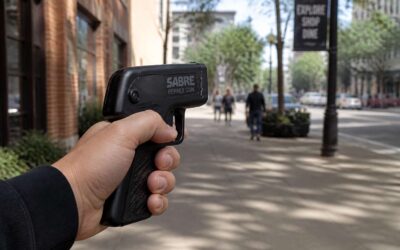
Consider a practical scenario in a shopping centre, where a mugger produces a knife. Your options are constrained by bystanders, security cameras, and the presence of third parties. The law will ask whether you had time to call for help, to move toward an exit, or to use non-lethal force like pepper spray. In such cases, the threshold for using lethal force in self defence is high, because the environment itself provides alternatives. Acting decisively is crucial, but acting recklessly can turn a justified defence into a criminal charge.
Now picture the same knife wielder entering your bedroom at night. The dynamics change completely. You have no retreat, no backup, and no time to weigh alternatives. The law understands this reality. Private defence in your own premises allows you to meet force with force, even deadly force, if you genuinely believe your life or your family’s lives are in immediate danger. The principle of proportionality remains, but it is interpreted through the lens of a terrified homeowner, not a calm observer reviewing footage later.
A few factors commonly influence how courts evaluate these distinct situations:
- The location of the confrontation, since a home invasion carries stronger legal protections than a street encounter.
- The availability of a safe escape route, which is largely absent indoors but often present in public areas.
- The level of threat posed, including whether the attacker displayed a weapon or merely threatened violence.
- The timing of your response, as a pre-emptive strike is more defensible in your home than in a public space.
The application of these principles is not theoretical. In South Africa, statistics show that home invasions and armed robberies occur with alarming frequency, which shapes how courts interpret reasonable behaviour. A person who acts swiftly against an armed intruder in their living room is viewed with more leniency than someone who escalates a verbal argument in a bar. The context dictates the standard, and the context is always location-specific.
Ultimately, the distinction between self defence on the street and private defence in your home comes down to options. Where options exist, you must use them. Where they do not, the law grants you the latitude to survive. Understanding this difference before you need it could be the difference between walking free and facing a courtroom.
Responding to Threats Against Family Members
The most harrowing scenario in private defence involves protecting those who cannot protect themselves. When a spouse or child is threatened, the legal analysis shifts from your personal safety to the duty of care you owe to your household.
South African courts recognise that the instinct to shield family members from harm is a fundamental aspect of human behaviour. This recognition, however, does not grant blanket immunity. The law still applies the test of reasonableness, asking whether your belief in the danger was genuinely held and objectively justified under the circumstances.
Consider the timing of your intervention. If you witness an assailant raising a weapon toward your child, you are not expected to wait until the blow lands. The legal principle of imminence accommodates swift action when hesitation could prove fatal. A defensive strike delivered moments before an attack is a valid exercise of private defence, provided your perception of the threat was reasonable.
Courts examine several factors when evaluating such responses:
– The age and vulnerability of the family member under threat
– The physical disparity between the attacker and the intended victim
– The availability of any non-forceful alternative at that precise moment
– Whether your actions ceased once the threat was neutralised
The distinction between protective versus punitive force remains critical. Force justified as self defence and private defence ends when the danger ends. Striking an incapacitated intruder to exact vengeance crosses into criminal territory, regardless of your emotional state. Your defensive actions must be fired by necessity, not fury, however understandable that fury may be.
Common Misunderstandings and Avoidable Mistakes
The Myth of the ‘First Punch’ Rule
The greatest fallacy whispered in the shadow of a looming threat is that the law requires you to be struck first. This dangerous fiction often leads to hesitation at the most critical moment. In the realm of criminal law, the concept of self defence rests not on a rigid turn-taking system, but on the objective assessment of an imminent threat. The judicial system examines the totality of the circumstances, asking whether you reasonably believed that force was immediately necessary to prevent harm.
Legally, the absence of a physical blow is not a prohibition against action. The focus is on the initial aggressor’s conduct, their possession of a weapon, and their verbal threats. Conversely, throwing the first punch in a heated argument, where you could have safely retreated, is aggression, not defence. The doctrine of private defence is a shield, not a sword. To use it legally, your actions must be defensive in nature, proportional to the threat, and not born from a desire for retaliation or revenge.
While the sequence of events matters, the core question always revolves around the intention and reasonableness of the response. Consider this simplified breakdown of how the courts view the interaction:
– The Aggressor: The individual who initiates the physical confrontation without legal justification.
– The Defender: The individual who uses force to repel an unlawful attack, believing it is necessary to protect themselves.
– The Mutual Combatant: A person who willingly engages in a fight, which strips them of the legal protection offered by self defence.
This distinction is crucial. The law acknowledges that a defender may be forced to make split-second decisions in a chaotic environment. Therefore, the standard is not one of perfect hindsight but of reasonable belief. If your back is against the wall and an attacker is advancing with violent intent, the law does not demand you make yourself a passive victim. It grants you the right to meet force with force, even if that means landing the decisive blow first. However, I have seen too many cases where individuals claimed private defence but their actions were clearly offensive, driven by anger rather than necessity. The line is thin, but the consequences of crossing it are severe.
Pre-Emptive Strikes – When Are They Justified?
Let’s cut through the fog. A pre-emptive strike in the context of self defence and private defence is not about getting your retaliation in first. It is about acting on a clear, present, and unlawful threat that has already materialised. The law does not require you to absorb the opening salvo of a violent attack before you are permitted to respond. If an assailant winds up a punch or reaches for a weapon, the threat is imminent, and your response can be immediate.
However, the line between a justified pre-emptive action and a criminal assault is often blurred by a poor understanding of the facts. The courts will scrutinise whether your belief in the need for force was objectively reasonable. Acting on a hunch that someone might become violent is not enough. A vague suspicion, a heated stare, or an argument that has not escalated to physicality does not create a legal basis for you to strike. That is not defence; that is instigating a brawl and pleading self defence and private defence after the fact.
The key distinction lies in the attacker’s conduct. Consider these scenarios to see how the law views different pre-emptive actions:
– A person is advancing towards you with a knife. You use force to stop them. This is lawful.
– A person is shouting insults but has made no move towards you. You punch them. This is an assault.
– A person reaches into their jacket for what you reasonably believe is a firearm. You act first. This may be justified.
In essence, the law assesses the totality of the circumstances. It looks at the attacker’s ability to cause harm, their opportunity to do so, and the jeopardy you are placed in. If all three elements are present, the fact that you threw the first punch is irrelevant. The action is defensive because it is designed to neutralise an existing threat, not to punish or pre-empt a distant possibility. The critical error is confusing a fear of future violence with an immediate, actionable danger. The legal framework is built on facts, not on paranoia. If you act too soon, you lose the protection of the doctrine, and your “defensive” move becomes the initial act of aggression.
The Fine Line Between Defence and Retaliation
One error is mistaking the right to defend with a licence to punish. In South African law, self defence and private defence are reactive. They justify force while the attack is ongoing or imminent. When the assailant breaks off or drops their weapon, the legal basis expires. Continuing to strike is retaliation, not defence!
Another mistake is acting on anger rather than necessity. If you think, “That will teach them”, you have crossed the line. Force driven by vengeance fails the reasonableness test and negates any claim to self defence and private defence:
- Believing verbal abuse justifies physical response
- Thinking a past threat allows future action
- Assuming excessive force is excused by fear
These errors turn lawful defence into criminal assault. I have seen this distinction cost people freedom. The critical question is never who threw the first blow, but whether your response was necessary to end a present danger.
Using Excessive Force – Legal Repercussions
The most common refrain heard in South African courtrooms after a physical confrontation is not “I acted in self defence,” but “I thought I could hit back harder.” The law does not compare who started the fight. It examines your actions and whether each blow was necessary and proportionate to the danger you faced. Excessive force is not an acceptable miscalculation.
Self defence and private defence protect you only while you repel a present threat. The moment your response exceeds that threat, or continues after it ends, you lose the protection. I have seen this mistake cost people their liberty. Several misunderstandings drive this error:
- Assuming fear alone justifies any violence
- Believing anger permits a weapon against an unarmed attacker
- Thinking injury severity does not matter once the threat was real
South African courts assess your conduct, not your indignation. When force becomes excessive, private defence fails.
Failing to Document the Incident – Evidence Pitfalls
A single, unshakeable statistic defines many failed claims: nearly every South African courtroom review will tell you that the incident itself is only half the case. The aftermath provides the rest.
When tempers cool and the adrenaline fades, the legal lens sharpens its focus on the evidence. A common error is assuming the law will simply accept your version of events because the threat was real. It will not. After the threat dissipates, the onus shifts to you to prove the necessity of each action. Failure to document your perspective immediately can blur the line between defending yourself and criminal behaviour. Your memory, clouded by survival instinct, becomes a liability. The absence of a prompt, detailed account of your actions can be interpreted as a lack of truthfulness. This hesitation is often misconstrued as guilt. The legal system is built on evidence, not silence.
Consider the stark differences in the quality of evidence:
- Witnesses may disappear or alter their stories over time.
- CCTV footage is often overwritten or conveniently lost.
- Physical evidence, such as bruising or damage, heals and fades.
Both self defence and private defence rest on the foundation of a credible narrative. A narrative built on hasty decisions and a hazy recollection is a fragile thing. It disintegrates under scrutiny. Once the state presents its version, you lose the opportunity to shape the record. Your legal protection depends on the integrity of your account immediately following the event. Without that foundation, the entire claim can crumble. The moral victory is lost without a legal one.
Misinterpreting Local Self-Defence Legislation
South Africa has no single statute that defines every rule of self defence and private defence. The law rests on common law principles, judicial precedent, and careful interpretation. Many people assume a written checklist exists. They look for a specific code or local ordinance. This misunderstanding leads to serious missteps.
For example, some believe that self defence and private defence require identical conditions regardless of context. Others assume that any fear, however subjective, justifies force. The courts apply an objective reasonableness test. Misreading the law can turn a lawful defensive act into a criminal one.
- Assuming that any force is allowed if you feel threatened.
- Expecting a written law to list every permissible action.
- Relying on overseas rules that conflict with South African precedent.
These errors come from confusing legal doctrines with personal instincts. Local legislation, precedent, and the specific facts set boundaries. Understanding them requires more than a casual reading.
Seeking Legal Guidance and Further Resources
When to Consult a Criminal Defence Attorney
Understanding the Importance of Case Law Precedents
When the stakes involve liberty, seeking legal guidance before making statements can change the trajectory of your matter. South African legal practice treats self defence and private defence as fact-bound inquiries, where precedent carries significant weight. Case law precedents refine vague statutory language into workable tests.
Practitioners often consult appellate decisions to assess whether force was proportionate. The law reports are the starting point. Academic commentaries unpack the nuances behind each judgement. For those navigating this terrain, consider these sources:
- The South African Criminal Law Reports
- Provincial Legal Aid boards
- University law clinics offering free consultations
These resources reveal patterns that are not obvious from reading legislation alone.
Official Guidelines and Statutory Frameworks
The Department of Justice website offers downloadable materials on the statutory frameworks that govern self defence and private defence. I recommend reviewing these alongside the Domestic Violence Act and the Criminal Procedure Act, as you may find the interplay between statutes changes how a claim is presented.
Legal practitioners often consult the Legal Practice Council for ethical guidance. The South African Human Rights Commission publishes reports on use of force, which helps me understand how courts interpret official guidelines in practice.
Be mindful that a magistrate may take judicial notice of the South African Police Service Standing Orders. These orders are not always easy to source, yet they frequently determine what constitutes reasonable force. A legal clinic can assist you in locating the relevant police directives, though I suggest you keep your own record of sighted documents and correspondence should a dispute arise about what was available.
- The South African Police Service complaint line handles procedural violations.
- Provincial Legislative Libraries hold archived statutes and regulations.
Practical Training and Defensive Tactics Courses
Understanding the theoretical underpinnings of self defence and private defence only carries you so far. When I sit with clients, the gap between legal knowledge and physical response becomes glaringly apparent. Practical training bridges that gap. A reputable defensive tactics course teaches situational awareness, de escalation, and force application. These skills influence how a court perceives your actions, because they demonstrate a commitment to measured response.
- Scenario based drills that simulate home invasions
- Legal briefings on use of force in South Africa
- Hands on training with non lethal options
Seeking legal guidance is equally vital. Attorneys who specialise in criminal defence can review your training records and incident reports. The Legal Practice Council offers referrals, and provincial libraries house archived judgments that illuminate judicial thinking. Pairing legal counsel with physical preparation creates a coherent strategy for any claim involving self defence and private defence. You must document every course attended and every certification earned, as these documents become exhibits that support your narrative of reasonableness.
Books and Online Resources for Legal Study
Seeking legal guidance before an incident occurs is uncommon, yet it proves decisive when self defence and private defence claims are tested. I have seen clients succeed largely because their attorney knew the local courts well. The Legal Practice Council referral system remains the most reliable route to finding qualified counsel.
Further resources deepen your grasp of defensive force law. Snyman’s Criminal Law is the foundational textbook, while SAFLII provides free access to court judgments. Magistrates’ commission publications and university open courseware offer structured study material for anyone serious about preparation.
- Read updated case law on private defence monthly
- Track amendments to the Criminal Procedure Act
- Attend legal workshops that examine use of force scenarios
Pair these tools with professional advice to strengthen your position.
Building a Personal Safety Plan Within Legal Boundaries
Seeking legal guidance before an incident occurs is uncommon, yet it proves decisive when self defence and private defence claims are tested. I have seen clients succeed largely because their attorney knew the local courts well. The Legal Practice Council referral system remains the most reliable route to finding qualified counsel. An initial consultation is not merely a formality; it is an opportunity to understand how prosecuting authorities in your district interpret defensive force. Attorneys familiar with the magistrates in your area can advise on the nuances of your situation with a clarity that textbooks cannot offer.
Further resources deepen your grasp of defensive force law. Snyman’s Criminal Law is the foundational textbook, while SAFLII provides free access to court judgments. Magistrates’ commission publications and university open courseware offer structured study material for anyone serious about preparation.
1. Read updated case law on private defence monthly
2. Track amendments to the Criminal Procedure Act
3. Attend legal workshops that examine use of force scenarios
Pair these tools with professional advice to strengthen your position.
Building a personal safety plan requires more than physical preparedness; it demands an understanding of legal boundaries. A documented strategy that includes lawful responses to intrusion aligns your actions with the requirements of self defence and private defence. Residents often ignore the value of rehearsing their responses to home invasion, ensuring that any reaction remains proportionate to the threat. Include contact details for your attorney in your emergency plan. Record the expected actions of your family members to prevent confusion during a crisis.
A personal safety plan that operates within legal boundaries focuses on de escalation and retreat where possible. The law recognises your right to protect yourself, but it expects a measured approach. Your daily choices, from securing your premises to knowing when to withdraw, shape your legal standing as much as any single incident. Preparation of this nature transforms abstract legal principles into practical habits, leaving nothing to chance when you must act decisively.


0 Comments